Imagine Sarah, who bought a new home with a small front lawn and two raised vegetable beds. After a month she noticed yellowing grass, soggy soil, and wilting tomato plants that perked up only briefly after she watered. She was manually running sprinklers every other day "just to be safe," until a neighbor suggested her schedule might be the problem. That scenario—too much attention with the wrong delivery method—is common. This guide helps you match the right smart irrigation solution to the exact overwatering issue you see.
How to Tell If Overwatering Is the Real Problem
Problem: Symptoms can look like disease, nutrient deficiency, or pest damage, but the giveaway is waterlogged soil plus roots lacking oxygen. If your lawn feels spongy, or the top 2–4 inches of soil is constantly wet, you’re likely overwatering. In containers, overly heavy pots that stay saturated are another clear sign.
Concrete signs to watch for
- Yellow or pale leaves that don’t brown at the tips (often seen in lawns and bedding plants).
- Mildew, fungus, or moss growth on the soil surface or turf.
- Persistently soft, muddy ground after 24–48 hours following irrigation.
- Root rot or a foul smell when you dig up a sample (common in vegetable beds).
Example: According to university extension guidance, most turf species need about 1–1.25 inches of water per week; exceeding that regularly promotes shallow roots and disease. EPA research also shows that smart irrigation controllers can cut outdoor watering waste substantially—some studies report savings up to 15%–30% depending on region and controller type (see EPA WaterSense) https://www.epa.gov/watersense.
Match the Right Solution to the Problem: Lawn, Garden, or Containers
Problem: Not every overwatered area needs the same fix. The solution must match scale and plant type. Here’s how to pair the symptom with the appropriate setup.
Small lawn with patchy pooling
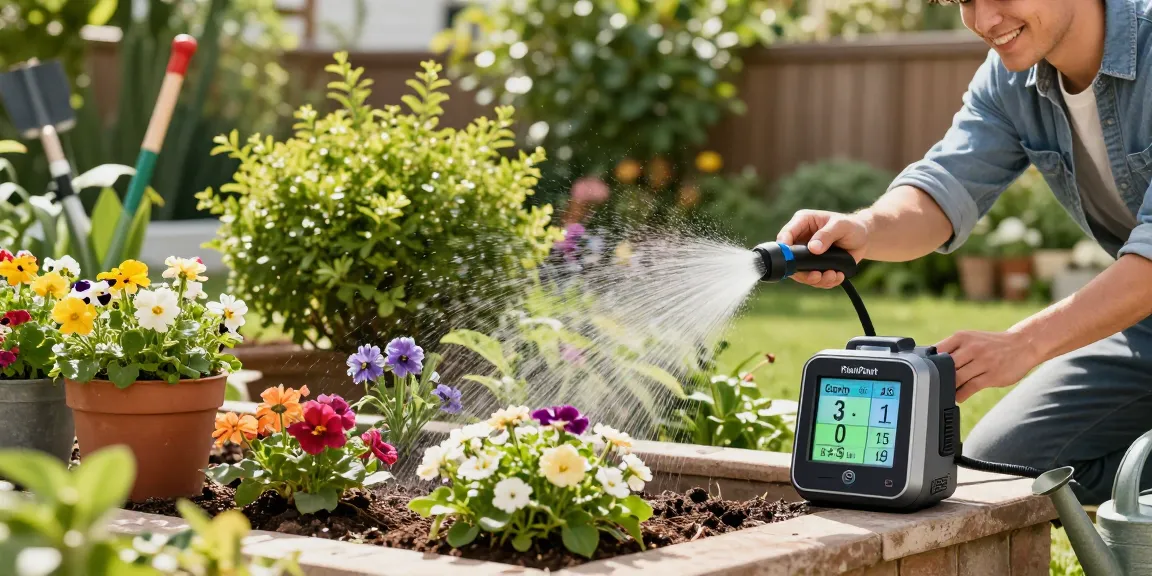
Solution: Use a mobile, scheduled sprinkler setup and a WiFi-enabled timer that limits run times. For a 500–1,500 sq ft front yard, short, frequent manual runs encourage shallow roots. Instead, program shorter, less frequent cycles early morning and avoid mid-day. A WiFi timer from RainPoint can handle that schedule automatically and let you pause watering when rain is forecast. Example: Set 2 cycles of 10 minutes early morning twice a week in late spring for cool-season grass—then monitor soil moisture and adjust.
Large lawn with inconsistent coverage
Solution: Upgrade to a smart in-ground controller with zoning. Overlap spray head patterns but run zones long enough to soak the root zone then stop—rather than frequent short bursts. Large systems benefit most from weather-based adjustments and flow sensing. Concrete figure: moving from a fixed timer to a weather-adjusting controller can reduce water use by an estimated 20% or more in many climates (university extension estimates vary by species and locale).
Vegetable beds with wilting or yellowing plants
Solution: Switch to drip irrigation or a soaker-line paired with a smart timer that schedules deeper, less frequent irrigation. Drip delivers water at the root zone, preventing surface saturation and leaf wetness that invites disease. For a 6x10 ft raised bed with tomatoes and peppers, install a 1–2 GPH emitter per plant and run for 30–45 minutes twice weekly, adjusting for rainfall and soil type.
How a Smart Timer Fixes Overwatering: Features That Matter
Problem: Many people think an “automatic timer” equals better watering. But the wrong timer can still overwater if it lacks adaptive features. The solution is choosing a timer with the specific capabilities that match your needs.
Key features to prioritize
- Weather-based or evapotranspiration (ET) adjustment — reduces runtime when it's cooler or rainy.
- Soil moisture sensor integration — prevents cycles when soil is already moist.
- Multi-zone scheduling — run different zone types (sprays, drip, soaker) on tailored schedules.
- Remote control and notifications — change settings after a heavy storm without going outside.
Example: For a homeowner with mixed plantings—lawn and raised beds—a WiFi timer that supports a soil sensor lets you stop the lawn zone if moisture remains high while still irrigating the vegetable beds lightly. If you want a quick solution that ties sensor feedback to action, see how you can fix overwatering issues with a smart irrigation timer—the link leads to sensors and controllers that automate that decision-making for you.
Practical Setup Examples and a Simple Comparison Table
Problem: Installing the wrong emitter type or schedule is the fastest way to create chronic overwatering. The solution is a concrete setup for each common yard type.
Three realistic setups
- Small front lawn (300–800 sq ft): Mobile sprinkler heads on a hose timer with a WiFi controller. Schedule: twice weekly, early morning, two 10–12 minute cycles with 2–3 hour soak time between cycles.
- Medium to large yard with in-ground system: Smart multi-zone controller with ET adjustment and rain shutoff. Schedule: 2–3 deep watering sessions per week, zone-specific durations (spray zones longer than rotor zones).
- Vegetable beds and flower borders: Drip tubing with 1 GPH emitters every 12 inches, controlled by a timer that supports 15–60 minute runs 2–3 times weekly; integrate a soil moisture probe for precise control.
AreaDeliveryTypical Weekly RuntimeSmall lawnMobile sprinklers + WiFi timer20–40 minutes, 2x weekLarge lawnIn-ground smart zones45–90 minutes per zone, 2–3x weekVegetable bedsDrip irrigation30–60 minutes, 2–3x week
Example: A homeowner with compacted clay soil will need longer soak times but fewer cycles; a sandy bed needs more frequent, shorter runs. So tailor runtimes to soil texture and plant needs rather than guessing.
Monitoring, Calibration, and Real-Life Adjustments
Problem: Even the best system can overwater if left unmonitored. The solution is a regular check-and-adjust routine paired with sensor feedback.
Monthly checklist
- Check soil moisture at the root depth with a probe—if the top 2–3 inches are wet but roots are dry, reduce frequency.
- Run a catch-can test on spray zones to measure actual distribution (aim for 1 inch/week delivery adjusted by soil type).
- Inspect emitters and soaker hoses for clogs or leaks that change output.
Example: Tom, who installed drip on his raised beds, found that heavy mulch reduced surface evaporation so he halved his runtime after two weeks. A soil moisture sensor told him when to turn watering back on—preventing both drought stress and constant wet soil.
When you need a reliable controller that supports multiple sensor types and zone schedules, consider a WiFi sprinkler timer such as the RainPoint model; it makes changes simple from your phone and helps you avoid the “more water is better” trap.